Ask the Arborist Toronto

Certified Arborist: Toronto, Durham Region, Kawartha Lakes, York Region, Peterborough & Northumberland County

At Sarginson’s Tree Services, we’ve been helping homeowners across Toronto and the GTA care for their trees for over two decades. Led by Chris Sarginson — a certified arborist with deep roots in Ontario — our team delivers expert, practical advice and services you can rely on.

Whether you’re dealing with storm damage, worried about tree health, or simply need seasonal maintenance, you’re in the right place.

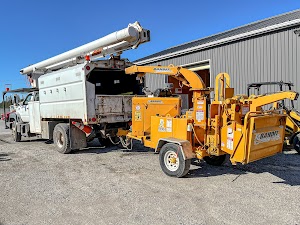
Tree removal durham region Ontario

Your Questions About Tree Care Answered by Chris Sarginson

Certified Arborist: Toronto, York Region, Durham Region, Northumberland County, Peterborough and Kawartha Lakes

Tree Pruning & Trimming: Ask the Arborist

Certified Arborist: Toronto, Durham Region, Kawartha Lakes, York Region, Peterborough & Northumberland County

Regular tree pruning is crucial for maintaining the health and shape of your trees. Regularly trimming trees will help maintain their structural integrity, reducing the risk of storm damage. Additionally, it ensures safety, especially in urban settings, by minimizing the risk of falling branches. Pruning also improves sunlight penetration and air circulation in the canopy promoting growth and the health of your trees and reducing the development of conditions that allow fungus, pests and diseases to thrive. Pruning also stimulates growth, directing energy to specific areas and aiding in the establishment of a strong tree structure, particularly beneficial for young trees. Here are some of the most common questions about tree trimming customers ask our arborists in Toronto, York Region, Durham Region, Northumberland County, Peterborough and Kawartha Lakes.

In my experience as an arborist in Toronto for over twenty years, some species of tree can take a more vigorous pruning than others. As a general rule, it is unlikely that cutting branches will kill trees but poor pruning can stunt its growth and if you overprune you can damage the structural integrity of the tree. You also risk damaging the tree by using the wrong equipment, not cutting the branch correctly and leaving a wound that will allow diseases or pests to damage the tree.

If you follow good arboricultural practices you can actually prune trees at any time of the year. That being said there are some good reasons to prune certain types of tree at particular times of year. You can read more detail about this in my article on when you should cut back trees and shrubs.

We do not recommend you top evergreen trees. In general trees do not respond well to topping, but evergreen trees in particular can be damaged by this practice. Topping the tree opens the core of the tree up to pests and disease. It can also result in the tree growing in a misshapen way with too much lateral growth. This in itself can make the tree more vulnerable to damage from storms or heavy snowfall.



If you are not pruning out diseased, damaged or dead branches (which should be done as and when necessary), the worst time to prune a tree is in the Summer or Fall when there is still time to promote new growth as this will stress the tree or prevent it from going into dormancy. In addition there are more insects around at this time so there is a greater chance of damage from pests. The exception to this is early flowering trees such as lilacs which should be pruned directly after they have finished flowering.

You generally do not need a permit to prune trees but, if you do not have the knowledge or skills to prune trees according to good arboricultural practice then you should hire a professional to carry out this work to prevent damage to the tree. If you live in an area that has strong tree protection bylaws there are heavy fines for injuring a tree. In Toronto, there are strong tree protection bylaws so it is essential you hire an arborist in Toronto who understands the local regulations for tree work.

Thinning the canopy of your trees is done to improve circulation of air and increase the amount of light that reaches the branches. You should never remove more than a third of the live branches from a mature tree.
A crown reduction is when we lower the height of the tree. We recommend 1/3rd crown reduction or less for the longevity of the tree.

This type of pruning is the removal of branches from structures, wires for even obstructed views such as a view at a cottage. We will remove what is necessary by taking at most 25-30% of the tree – keeping the longevity of the tree intact.

The best time to trim your oak tree is when the tree is dormant (November – March). This is for the removal of live growth as it helps avoid oak wilt. Dead growth can be removed at any time.

Tree Removal: Ask the Arborist

Certified Arborist: Toronto, Durham Region, Kawartha Lakes, York Region, Peterborough & Northumberland County

Despite the importance of preserving green spaces, there are cases where tree removal becomes necessary for safety, to prevent the spread of disease or to promote the health of other trees or plants. Reasons for tree removal include disease or infestation, structural instability, invasive roots causing damage or if trees have grown too close to other structures and present a risk. Removing diseased trees quickly can prevent the spread of infections to other, healthy trees. Selective tree removal is sometimes necessary when there are too many trees too close together. There may be too much competition for water or other nutrients or insufficient sunlight is penetrating the canopy.

Here are some of the most common questions about tree removal customers ask our arborists in Toronto, York Region, Durham Region, Northumberland County, Peterborough and Kawartha Lakes.

If you are worried that a tree is dangerous, diseased or dying, consult a professional arborist as soon as possible. Often there are steps that can be taken to save a tree. The earlier you bring a professional in the better if you want to save the tree.

In most cases you will need a permit to cut down or injure a tree in Toronto. The main exception to this is if the tree presents an immediate hazard. However, you will still need to consult an arborist to assess its condition so you can obtain an exemption.

If you remove or injure a protected tree without a permit you can be fined a minimum of $500 per tree and up to $100,000 per tree.

Some homeowners’ insurance will cover removing a tree that has been damaged by a storm if it has fallen on property. However, it is unlikely that your homeowners’ insurance will cover the removal of a tree that has fallen on your land but is not presenting a danger. Homeowners insurance does not cover trees that have become dangerous because of lack of appropriate care. Always check the terms of your homeowners’ insurance if you have trees on your property or if neighbouring properties have trees that could fall on your property.

It is highly unlikely that homeowners’ insurance will cover preventative tree removal as you have the obligation to maintain the trees on your property.

Arborist Toronto Emergency Tree Removal

Emergency Tree Removal

Arborist Toronto Tree Trimming

Tree Trimming

Arborist Toronto Tree Removal

Tree Removal

Arborist Toronto Stump Grinding

Stump Grinding

Pests & Diseases: Ask the Arborist

Certified Arborist: Toronto, Durham Region, Kawartha Lakes, York Region, Peterborough & Northumberland County

Trees in Toronto and the surrounding areas face a number of threats from pests and diseases that can jeopardize their health or even kill them altogether. One pest that poses a significant threat to Ontario’s trees is the Emerald Ash Borer. This invasive beetle has wreaked havoc on ash trees throughout the region. Another is the Asian Longhorned Beetle, which targets a variety of hardwood trees, including maple, birch, and poplar. Dutch Elm Disease is another long standing threat. In addition to pests, various diseases affect Ontario’s trees. There have already been several outbreaks of Oak Wilt in Ontario. This disease poses a significant risk to oak trees in the region. If you have trees on your property make sure you know the early signs so you can take action in time to save your trees. 

Below are some of most of the common questions about pests and diseases answered by our arborists. To find out more, read our blog articles about common pests and tree diseases in Ontario.

This could be a sign that the maple has a fungal infection called Anthracnose. You may also see leaf loss, cankers or young branches dying. The maple can become infected if it is in too damp conditions – sitting in moisture or surrounded by damp leaf debris or wood chips. You should remove possible causes and prune affected branches.

Maples can suffer from a variety of pests and diseases. Leaves that have brown spots and are curling, have black spots, are wilting or yellowing or have a blackish mold or powdery white mildew on them could indicate that the maple is diseased.

Pine trees are evergreen, so a healthy pine tree will keep its green colour all year round. If the pine is turning brown it indicates there is a problem but it does not necessarily mean the tree cannot be saved. If you have had drought conditions, that is most likely the cause. Conversely, it could also be a sign of waterlogged roots. Browning needles on a pine could be a sign of infection with a pine needle fungus. This needs to be treated with a fungicide. Another common reason for pine needles turning brown is an infestation of bark beetles.

If Your ash tree might be dying due to a beetle called the Emerald Ash Borer (EAB). Ash trees are commonly planted in Ontario in neighbourhoods in mass quantities as landscape trees. The EAB is a wood-boring beetle that is native to Asia but is now present in Canada. The Emerald Ash Borer has already killed millions of trees across North America. If you see any signs that your ash trees are looking unwell, consult a professional arborist immediately.

The first signs that your Ash trees have been affected by the Emerald Ash Borer could be woodpeckers coming to the trees to strip off the bark and try to get to the beetle. Other signs are a thinning tree canopy or vertical splits in the bark, although these could be due to other causes. A more signficant sign of infestation are D shaped exit holes in the bark of the tree. Please call an arborist at the first signs of trouble with your ash trees.

If the leaves on your tree are turning brown it does not necessarily mean the tree is dying. It could just be leaf scorch. Leaf scorch happens when the tree cannot supply enough water to all of its leaves. The leaves on your tree might look like they dying or burnt during months when we see high temperatures and dry winds which will in turn cause low moisture levels in the soil and water to evaporate from the surface of the leaves. Eventually, the leaf tissue will die looking as though the leaf is burnt around the edges or even crimpled up. You will not be able to do anything about the leaves that have already been scorched, but in most cases, the tree will recover if watered deeply. Occasionally leaf scorch is due to a disease which could kill the tree.

There are three common types of diseases that could cause your spruce tree to die. First, needle casts – like the name suggests this disease causes the tree to shed its needles. Next, tip blights – this fungal disease causes dieback on new shoots. Lastly, your spruce tree could be suffering from canker disease. This fungus infects branches or the main stem of the spruce tree. You will notice areas that ooze resin and are sunken in; these cankers can impact your tree’s ability to transport important nutrients and water causing individual branches to die off.

A fungus called “Ophiostoma ulmi” (Aka Dutch Elm Disease) is to blame for killing Elm trees. The disease is spread by two invading species, either the elm bark beetle or the European bark beetle. The beetles create tunnels through the bark of the trees, spreading the fungus throughout. When the beetles move to another tree the fungus is then transferred. Another way this fungus car spread is through the root system of the tree to trees beside one another or by the relocation of Elm firewood.

Poplars are a type of tree that are rapid growing but live a short life. That are about 20-30 different species of this type of tree. If they happen to be infected with poplar canker the tree will look like it has black circular areas that are known to sink in. This eventually leads to the tree dying.

Ask the Arborist about keeping trees healthy

Certified Arborist: Toronto, Durham Region, Kawartha Lakes, York Region, Peterborough & Northumberland County

Both tree thinning and canopy clean-up are beneficial to the long healthy life of your tree. Tree thinning can benefit your tree in many ways such as reducing the weight of heavy limbs, improving air movement and light penetration. When we thin the canopy we remove live branches from the outer canopy. Canopy clean up is the term we use when we remove dead, broken, detached, or diseased branches that are normally more than one inch in diameter. This could also include the removal of branches hanging in a tree that are ready to fall – some people refer to these as “widow makers.”

Have you noticed tree roots that are growing in a circle around the trunk of a tree? This is known as girdling roots. This doesn’t just “happen” to trees. Rather the tree is exposed to certain environmental factors such as improper planting or transplanting, planting the tree in a hole that is too small, having heavily compacted soil or planting too close to foundations, curbs or obstructions. They can affect the life of the tree as well as noticeable damage to the canopy of your tree.

As with most things, prevention is better than cure. It is extremely important that, if planting or transplanting trees, this is done properly. Inspect the root ball prior to planting. If there are roots encircling the base of the root ball break these up before planting for normal root development. If you notice girdling roots on an older tree, it is best to contact an arborist as girdling roots can compromise the stability of a tree.

To protect your tree during construction work you should implement a Tree Protection Zone (TPZ). The tree or trees that need protection must meet certain requirements based on the diameter of the tree, and their location. A TPZ might mean the protection of saving a healthy tree rather than having it removed. If someone fails to adhere to tree protection policies they could be held financially responsible for damage caused to the tree.

About Working With an Arborist

Certified Arborist: Toronto, Durham Region, Kawartha Lakes, York Region, Peterborough & Northumberland County

The International Society of Arboriculture. It is a membership organisation for tree care professionals.

An arborist report is a professional report by a certified arborist describing the condition of a tree. They can be used for many different purposes so there is no standard format for a report – it will depend on the reason it has been commissioned. A common reason for obtaining an arborist report is if construction work is planned that could affect protected trees, or if a tree needs to be removed in an area that has strong tree protection bylaws.

Costs will vary depending on the time it will take to produce the report. You should obtain a quotation for accurate pricing.

Commercial Tree Services

Arborist consultancy, tree maintenance contracts, golf course services, vehicle & operative hire, lot clearance

Ask the Arborist

Certified Arborist: Toronto, Durham Region, Kawartha Lakes, York Region, Peterborough & Northumberland County

Are you worried about the health of your trees? Think that one of your trees may be dangerous and need removing? Not able to find the answer to your question about tree care? If you have any queries about tree removal, tree pruning, hedge trimming, disease prevention or any aspect of tree care you can send me a mail or arrange for a free initial consultation.

Tree Care Articles & Advice

Ask the Arborist - Our Latest Articles

Send me a message

This contact form is deactivated because you refused to accept Google reCaptcha service which is necessary to validate any messages sent by the form.